The Senate Committee’s gambling report, chaired by the late Peta Murphy, issued 31 recommendations in June 2023—yet 1000 days later, the government’s 2026 reforms only partially address its sweeping demands. This comprehensive guide analyzes the implications of the Senate committee gambling report for ongoing reform efforts, comparing the report’s evidence-based suggestions with actual legislative action.
We examine why core demands like a full advertising ban and a national regulator remain unimplemented despite overwhelming public support. The gap between the Murphy Report’s vision and 2026’s incremental measures reveals ongoing political hesitation in tackling gambling harm.
- The Murphy Report demanded a full ban on gambling advertising and a national regulator, but 2026 reforms offer only partial restrictions.
- 81% of Australians support banning gambling ads, yet political hesitation has led to a cautious, incremental approach.
- Over 1000 days have passed without a formal government response, highlighting the gap between evidence and action.
- Other critical recommendations—data governance and prediction market regulation—remain overlooked in 2026 reforms.
- The Interactive Gambling Act 2001 remains the primary federal framework, but its amendments have been limited and piecemeal.
Murphy Report Implementation: What 2026 Reform Efforts Actually Deliver
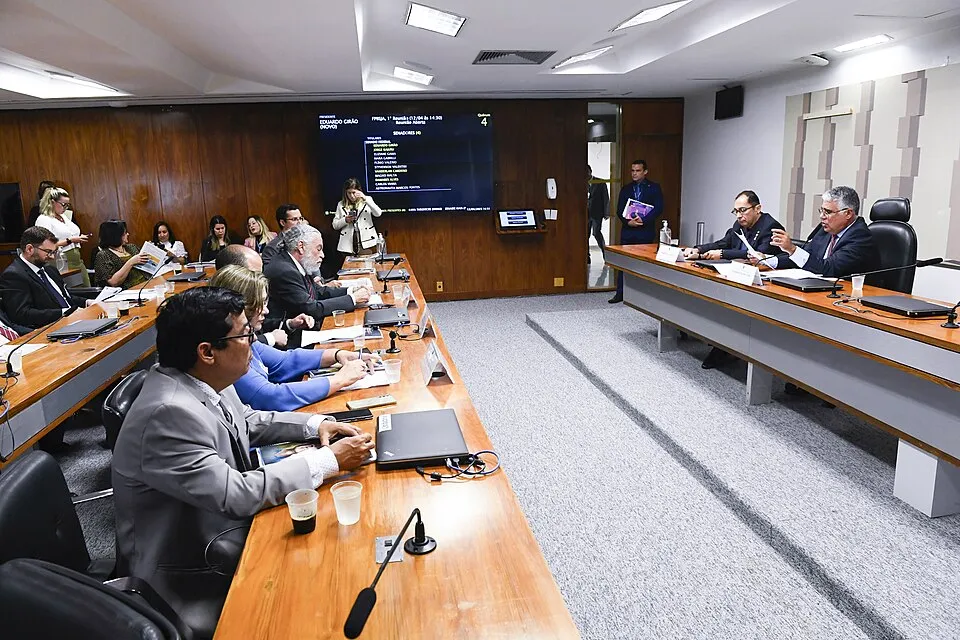
As of April 2026, implementation of the Senate committee gambling report’s recommendations remains largely incomplete. While the government has announced some measures, the two cornerstone proposals—a total advertising ban and a national regulator—are still unrealized.
This section evaluates the current status of the Murphy Report’s 31 recommendations and identifies which harm reduction strategies have been neglected. The Senate Committee’s final report, titled “You win some, you lose more,” was released in June 2023 and provided a comprehensive blueprint for reducing gambling harm.
Advertising Ban and Regulator: The Two Core Unmet Demands
- Full ban on gambling advertising: The Murphy Report called for a complete prohibition of all gambling advertising across all media, including online platforms, social media, and broadcast. The report identified advertising as a primary driver of gambling harm, particularly among young people. As of 2026, this recommendation remains unimplemented.
The government’s June 2026 reforms propose only a partial ban on social media and online ads, leaving broadcast television and radio advertising largely untouched. The 1000-day delay since the report’s release has seen no legislative action to enact a comprehensive ban.
- National gambling regulator: The committee recommended establishing a single federal authority to oversee all gambling activities in Australia. This regulator would centralize licensing, enforcement, and harm reduction initiatives, addressing the current patchwork of state and territory regulations. Despite the report’s clear mandate, no national regulator has been created. The government’s 2026 reforms do not include provisions for such an authority, leaving oversight fragmented and inconsistent across jurisdictions. Over 1000 days have elapsed without a formal response to this critical recommendation.
- Timeline context: The Murphy Report was handed down in June 2023. By April 2026, more than 1000 days have passed without the government issuing a formal response to the report’s 31 recommendations. This prolonged inaction underscores the disconnect between parliamentary evidence-gathering and legislative execution.
Other Harm Reduction Measures: Data Governance and Prediction Markets
The Murphy Report contained 31 unanimously supported recommendations covering a wide spectrum of harm reduction strategies beyond advertising and regulation. Two notable examples are data governance frameworks for gambling operators and the regulation of prediction markets. Data governance would require operators to implement robust systems for collecting, analyzing, and protecting player data to identify problem gambling patterns and intervene early.
Prediction markets, which allow betting on event outcomes, were flagged by the committee as emerging risks that could exacerbate gambling harm if left unregulated. Yet both areas have seen minimal attention in the 2026 reform agenda, which remains narrowly focused on advertising restrictions.
The oversight of these recommendations reflects a broader trend: the government’s incremental approach prioritizes politically safe measures over comprehensive harm reduction. Data governance frameworks, recommended by the committee, would align with international best practices like the Data Management Association’s Body of Knowledge (DAMA-DMBOK) to ensure responsible data handling. However, as of 2026, no federal mandate requires gambling operators to adopt such frameworks.
Similarly, prediction markets—which have grown in popularity—operate in a regulatory grey area. The Murphy Report urged their inclusion under the Interactive Gambling Act 2001, but this has not occurred.
The result is a reform package that addresses only a fraction of the evidence-based solutions presented to the Senate committee. Robust data governance is essential for gambling harm prevention programs to succeed, yet it remains unimplemented.
Do 2026’s Advertising Restrictions Meet the Murphy Report’s Demands?

The June 2026 advertising restrictions announced by the Albanese government fall significantly short of the Senate committee gambling report’s demand for a full ban. While presented as landmark reforms, they represent a partial, piecemeal approach that leaves many harmful advertising channels open. This section details exactly what the 2026 reforms propose and contrasts them with the committee’s original recommendations.
What the June 2026 Reforms Actually Propose
- Scope of the ban: The 2026 reforms prohibit gambling advertising on social media platforms and online channels, including targeted ads and sponsorships. However, the ban does not extend to traditional broadcast media such as television and radio, which remain permissible under the proposed amendments to the Interactive Gambling Act 2001. Additionally, certain exemptions may apply for in-play betting during live sports events, though specifics are still being drafted.
- Legislative vehicle: The government plans to implement these restrictions through amendments to the Interactive Gambling Act 2001, the primary federal legislation governing online gambling. The amendments would update the Act’s advertising provisions but would not rewrite its fundamental structure. This approach allows for relatively quick implementation but limits the scope to online and social media, avoiding the more contentious broadcast ban.
- Partial vs. full ban: The Murphy Report explicitly called for a comprehensive ban on all gambling advertising, recognizing that partial restrictions fail to address the pervasive nature of marketing exposure. The 2026 reforms, by contrast, are described by analysts as a “cautious compromise” that leaves significant loopholes.
For instance, ads on billboards, print media, and point-of-sale locations are not addressed, and the definition of “online” may exclude certain digital platforms. The proposed amendments echo some provisions of the Gambling Advertising Standards Bill introduced earlier, but they stop short of the full ban demanded by the Senate committee.
The 81% Public Support vs Political Hesitation
Research from the Australia Institute published in November 2025 found that 81% of Australians support banning gambling ads on social media and online platforms, a key aspect of gambling reform Australia 2025. Even more striking, similar numbers—around 80%—support extending the ban to all forms of gambling advertising, including broadcast.
This represents a clear democratic mandate for bold action. Yet the government’s 2026 reforms stop short of this demand, offering only a partial online ban.
The disconnect between public sentiment and political action stems from several factors. First, the gambling industry wields considerable lobbying power, though direct references to “industry influence” are often avoided in official discourse. Second, the government may fear electoral backlash from regions heavily dependent on gambling revenue, such as those hosting major racing events.
Third, there are concerns about legal challenges under trade or constitutional law, though the exact nature of these risks is debated. Whatever the reason, the result is a reform package that appears “landmark” in branding but inadequate in substance, leaving the core recommendation of a full ban unfulfilled. This political hesitation contrasts sharply with the urgent public health perspective that drove the Murphy Report’s findings.
The National Gambling Regulator: Why Australia Still Lacks a Central Authority
Australia’s gambling regulatory landscape remains a fragmented mosaic of state and territory laws, creating enforcement gaps that the Senate committee gambling report sought to close with a national regulator. As of 2026, this central authority does not exist, undermining consistent harm reduction efforts. This section explains why a national regulator is essential and what legislative changes would be needed to establish one.
Why a National Regulator Is Essential: Fragmented Oversight
Currently, gambling regulation in Australia is split between federal and state/territory jurisdictions. The Interactive Gambling Act 2001 provides a federal framework for online gambling, but it does not cover land-based venues like casinos and poker machines, which are regulated by individual states.
This division leads to inconsistencies: for example, some states allow certain types of machines while others prohibit them, and enforcement priorities vary widely. A national regulator would centralize oversight, ensuring uniform standards for licensing, consumer protection, and harm minimization across all gambling forms.
The Murphy Report emphasized that a single authority could better coordinate research, data collection, and public health campaigns. It would also have the power to impose sanctions on operators who fail to meet harm reduction obligations, regardless of their physical location. Without such a body, Australia’s approach remains reactive and piecemeal, with vulnerable populations falling through jurisdictional cracks.
- Required changes: The Murphy Report’s recommendation would require amendments to the Interactive Gambling Act 2001 to establish a federal regulatory body, potentially with a dedicated Gambling Advertising Authority, with enforcement powers over all gambling operators, including those currently regulated by states. This could involve constitutional challenges, as gambling has traditionally been a state responsibility. The government would need to negotiate with states or pursue a cooperative model, but as of 2026, no such legislative initiative has been introduced.
The lack of a central authority also complicates economic impact assessments of gambling restrictions, making it harder to evaluate policy effectiveness.
Legislative Hurdles: Amending the Interactive Gambling Act 2001
- Current legal framework: The Interactive Gambling Act 2001 is the cornerstone of federal gambling regulation, but its scope is limited primarily to interactive (online) gambling services. It does not grant the Commonwealth authority over land-based gambling, which remains under state control. To create a national regulator with comprehensive powers, the Act would need substantial amendments or replacement with new legislation that expands federal jurisdiction.
- Required changes: The Murphy Report’s recommendation would require amendments to the Interactive Gambling Act 2001 to establish a federal regulatory body with enforcement powers over all gambling operators, including those currently regulated by states. This could involve constitutional challenges, as gambling has traditionally been a state responsibility. The government would need to negotiate with states or pursue a cooperative model, but as of 2026, no such legislative initiative has been introduced.
- Political obstacles: Despite the clear evidence base, establishing a national regulator faces political hurdles. The government may be reluctant to provoke conflict with states or to allocate the necessary resources for a new bureaucracy. The 2026 reforms focus instead on narrower advertising restrictions, which are perceived as less contentious.
This incremental strategy leaves the fundamental structural weakness—fragmented oversight—unaddressed, perpetuating the regulatory gaps that the Murphy Report identified. The report, chaired by the late Peta Murphy MP, is archived on the Parliament website and summarized on Peta Murphy’s parliamentary contributions page.
The Senate committee gambling report remains a pivotal document in Australia’s gambling reform debate.
Its 31 recommendations, grounded in extensive evidence, provide a roadmap for meaningful harm reduction. Yet after 1000 days, the government’s response has been disappointingly limited.
The most surprising finding in analyzing the Senate committee gambling report’s implications is the stark contrast between the government’s “landmark” rhetoric and the actual inadequacy of its 2026 reforms. While advertised as a major step forward, the measures fall far short of the evidence-based, comprehensive approach demanded by the Murphy Report and supported by 81% of Australians. This paradox highlights a persistent gap between political messaging and substantive action on gambling harm.
Readers who want to see real change should contact their local Member of Parliament to demand full implementation of all 31 recommendations, especially the complete ban on gambling advertising and the establishment of a national regulator. Visit gambling reform page to find your representative’s contact details and join the campaign for meaningful gambling reform in Australia.
